THE HAUNTED ISLES: FOLK HORROR AND THE WYRD IN THE UK AND IRELAND | Offscreen
It isn't just houses that are haunted. Entire nations can be haunted as well. The islands comprising Great Britain and the Republic of Ireland gave birth to three of horror's seminal gothic horror archetypes - Frankenstein, Dr Jekyll/Mr Hyde, Dracula - conceived in the 19th century by, respectively, an Englishwoman, a Scotsman and an Irishman. But there is another form of horror haunting the collective psyche of these lands, though it wasn't until 2003 that this subgenre was labelled Folk Horror by British director Piers Haggard in an interview about his film The Blood on Satan's Claw (1971). This, Witchfinder General (1968) and The Wicker Man (1973) are considered the "Unholy Trinity" of Folk Horror, setting out the subgenre's "rules". Such films typically contain one or more of the following elements: a small, isolated community on an island or in the countryside; a connection to the landscape; the unearthing of old artefacts of suppressed pagan cultures with links to blood sacrifice and witchcraft; the past intruding on the present, sometimes channelled through standing stones or ancient trees; an obsession with legends and superstition.
The subgenre's roots lie in the 1960s counterculture flirtation with the occult and an arcadian past. In Britain, this spawned an abundance of folkloric TV, films and documentaries drawing on paranormal or uncanny events that would later be grouped together under the Anglo-Saxon term "wyrd", reflecting the existential unease permeating so much of post-war British culture, particularly in the work of writers such as Nigel Kneale (Quatermass and the Pit, The Stone Tape). This sense of collective anxiety peaked in the 1970s, a decade of political, economic and social turmoil, and infiltrated the nation's living-rooms by way of TV series such as A Ghost Story for Christmas, telefilms such as Alan Clarke's Penda's Fen (1974), even children's programmes such as Doctor Who. In between, younger viewers would be traumatised by government-funded Public Service TV spots, commissioned by the Central Office of Information, which warned, sometimes explicitly, of the lethal consequences of trespassing on farmland or railway tracks.
Folk Horror reached its zenith in the 1970s, but the children of that decade, now adult creators in their own right, have spearheaded a 21st century revival, exemplified by films such Ben Wheatley's Kill List (2011), Liam Gavin's A Dark Song (2016), Mark Jenkin's Enys Men (2022) and Paul Duane's All You Need Is Death (2024). "The Haunted Isles" retrospective comprises some 30 features, TV episodes and shorts, including The Outcasts (1982), screened in the presence of writer-director Robert Wynne-Simmons, and Ken Russell's The Lair of the White Worm (1988). Rupert Russell launches this retrospective with his 2024 documentary The Last Sacrifice, while a special "Wyrd British TV Night" completes the programme. Finally, the concepts of Folk Horror and Wyrd Media will be explored at an international conference.
THE APPOINTMENT
27 March 2025 - 21h30 | Cinema Nova
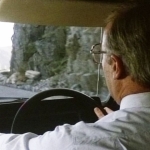
What begins as a spooky chiller turns into a nail-biting exercise in mounting dread when a middle-class father (Edward Woodward) is obliged to miss his teenage daughter's violin recital because of a business appointment. There are dark forces at work, with nightmares and portents building up to a shattering finale.
- ‹‹
- 3 of 3