EXORCISING FRANCO: SPANISH GENRE CINEMA 1968-1983 | Offscreen

In 1939, after a brutal civil war, General Francisco Franco seized control of Spain. Backed by the military and the Catholic church, he ruled for decades with an iron fist, banning opposition and expunging dissent. But in the early 1960s, an economic downturn forced the fascist regime to partially open up to the outside world. Manual Fraga Iribarne, then Minister of Information and Tourism, wanted to project a new, modern image of Spain to the rest of the world, not only by encouraging mass tourism, but by boosting international co-production within the film industry. This provided an ideal breeding ground for horror and fantasy, hitherto rare in Spanish cinema. From 1968 onwards there was a veritable boom in these genres, spearheaded by box-office sensations such as The House That Screamed by Narciso Ibáñez Serrador (whose TV anthology series, Tales To Keep You Awake, was also hugely influential) and The Werewolf Versus the Vampire Woman by Léon Klimovsky, whose "Hombre Lobo" films made a superstar out of Paul Naschy.
During this Golden Age of Spanish "Fantaterror", subversive messages were smuggled out to a wide audience behind an "innocent" façade of stories about vampires, werewolves and zombies. Films such as The Blood Spattered Bride, The Living Dead at Manchester Morgue and Blood Ceremony are not only steeped in blood, but in Marxist, anti-authoritarian or proto-feminist social criticism. Yet "Fantaterror" didn't restrict itself to the realm of the supernatural. Another subset of the genre dealt with the everyday reality of Spanish society, where violence, cruelty and hypocrisy simmered beneath the surface, bursting out on to the screen in films such as The Cannibal Man and A Candle for the Devil. Unsurprisingly, it was into this type of film that the scissors of Falangist censorship cut most deeply.
This same censorship would gradually lose its grip after Franco's death in 1975. During this transitional period, or "Transición", while the path to modern democracy was littered with extreme right-wing conspiracies and failed coups, Spanish cinema became more explicit. Eloy de la Iglesia, formerly restricted by censorship, now emerged as a radical iconoclast with provocative masterpieces such as The Creature or The Priest, while Klimovsky burned the facist oligarchy to the ground in The People Who Own the Dark. The delirious psychothriller The Killer of Dolls offered another foretaste of things to come, and all hell broke loose with the introduction of the "S" classification in 1978. An avalanche of mainly cheap sexploitation swept through Spain like a delayed version of the events of May 1968, which had largely bypassed the country. But also slapped with the "S" rating were bizarre, unconventional and politically radical films such as the one-of-a-kind oddity Dimorfo, and Arrebato, which has since acquired mythical status.
The perfect gateway to this exceptional retrospective of 31 films is a lecture on "Fantaterror" by Antonio Lázaro-Reboll and the documentary Exorcismo: The Transgressive Legacy of Classificada 'S" by Alberto Sedano, both of whom will be joining us in Brussels to guide us through this pivotal era in Spanish film genre, a turning-point in the history of Spain itself.
PIECES
27 March 2026 - 21h00 | Cinematek
A killer with mummy issues is hacking up co-eds with a chainsaw in this Euro-slasher set on a US campus, but filmed in Madrid. Ticks all the cult trash boxes: hilariously duff dialogue, gore galore, dumb cops, and luckless young women whose character arcs consist of them getting naked before being horribly murdered.
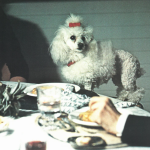
CANICHE
29 March 2026 - 16h30 | Cinematek
In an old house near Barcelona, Bernardo and Eloísa can't wait to inherit their aunt's money. Eloísa plays sex games with their white poodle, while her brother sates his desires in even more mind-boggling ways. Luna, ever provocative, delves deep into this unhealthy ménage, made even creepier by Béla Bartók's eerie music.
- ‹‹
- 3 of 3